
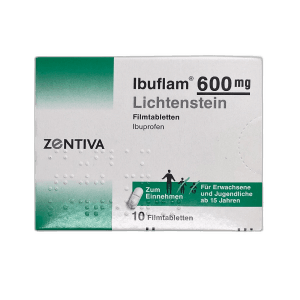
What is ibuprofen?
Ibuprofen is a non-steroidal anti-inflammatory (NSAR) with pain-relieving, anti-inflammatory and fever-lowering effect. In low dosages (up to 400 mg) it is available without prescription; higher dosages (600 mg, 800 mg) are prescribed.
Known brand names are Ibuflam® and Ibu-ratiopharm®. Ibuprofen is one of the most studied painkillers and has been used since the 1960s.
It is particularly well suited for mild to moderate pain and inflammatory diseases of the musculoskeletal system.
Active Ingredients & Mechanism of Action
Active ingredient: Ibuprofen
Ibuprofen inhibits the enzymes cyclooxygenase-1 and -2 (COX-1 and COX-2):
Active mechanism:
- Blocks Prostaglandin synthesis
- Prostaglandins sensitize pain receptors and promote inflammation
- The inhibition raises the pain threshold and dampens the inflammatory reaction
Wirkprofil:
- Measure relief: Effect after 30–60 minutes
- Inflammation inhibition: Full effect after a few days of regular intake
- Fieber reduction: Fast effect at elevated temperature
- Activity: 4–6 hours
Compatibility: Ibuprofen has a comparatively favorable gastrointestinal and cardiovascular risk profile among the NSAR.
Who is it suitable for?
Ibuprofen is suitable for:
- Light to moderate pain
- Headaches and toothaches
- Menstrual pain
- muscle and joint pain
- Back pain
- Rheumatoid arthritis, arthritis
- fever and cold pain
- Postoperative and post-traumatic pain
Not suitable:
- In active stomach ulcers
- In severe heart, liver or kidney failure
- In the last third of pregnancy
- With known NSAR intolerance
Available Dosages
Prescription doses:
- 600 mg tablets
- 800 mg tablets (retard)
Use daily dose (adults):
- 1200–2400 mg, divided into 3 single doses
- Maximum daily dose: 2400 mg
Recept-free dosages (for info):
- 200 mg, 400 mg
Recommendation: Low effective dose for the shortest necessary duration.
How to Take
Intake:
- Take tablets unzerkaut with a glass of water
- To or after a meal (better gastric compatibility)
- Equality between revenue
Description scheme:
- 600 mg: 1 tablet 2–3 times a day
- 800 mg Retard: 1 tablet 2 times a day
Important notes:
- Do not take together with ASS (Aspirin) – Ibuprofen can eliminate the blood-thinning effect of ASS
- Do not take sober
- Consider stomach protection for long-term use
Contraindications
**Ibuprofen may not be accepted at:* *
- hypersensitivity to ibuprofen or other NSARs
- Active gastric or intestinal ulcers
- Heavy heart failure
- Heavy kidney or liver failure
- Last third of pregnancy
- Unexplained blood disorders
Preview at:
- Older patients
- High blood pressure
- Asthma (ASS intolerance)
- Ingestion of blood thinners
- Chronic-inflammatory bowel diseases (Morbus Crohn, Colitis ulcerosa)
pregnant: In the 1st and 2nd Trimenon only with strict indication. In the 3rd Trimenon contraindicated.
Possible Side Effects
Family (1–10 %):
- stomach pain, heartburn
- nausea, diarrhea
- headache, dizziness
** Occasionally (0.1-1 %):* *
- Gastric ulcer
- Gastrointestinal bleeding
- Skin rash
- Edema
Selten:
- Heavy allergic reactions
- Kidney malfunction
- liver damage
- Blood-image changes
** The risk of gastrointestinal side effects increases with the dose and duration of the application.
Interactions
Not combine with:
- ASS (removes the thrombocyte aggregation inhibition)
- Other NSAR (increased risk of side effects)
Increased bleeding risk with:
- Anticoagulants (Marcumar, DOAKs)
- SSRI antidepressants
- corticosteroids
Sustainability of:
- ACE inhibitors, sartans
- Diuretics
Increased toxicity of:
- Methotrexate
- Lithium
- Digoxin
Frequently Asked Questions
Similar Medications

Is ibuprofen right for you?
A licensed doctor will review your information and issue a prescription if suitable. Discreet and secure.
Important Notice
This information does not replace medical advice. If you have questions about your health or the suitability of this medication, please consult a doctor. Read the package leaflet before use.