
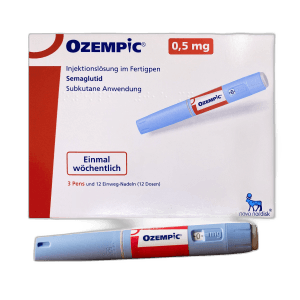
What is ozempic?
Ozempic is a prescription drug from Novo Nordisk with the active ingredient Semaglutid. It was originally developed and approved for the treatment of type 2 diabetes. In recent years, Ozempic has also gained great attention as a medicine for weight reduction.
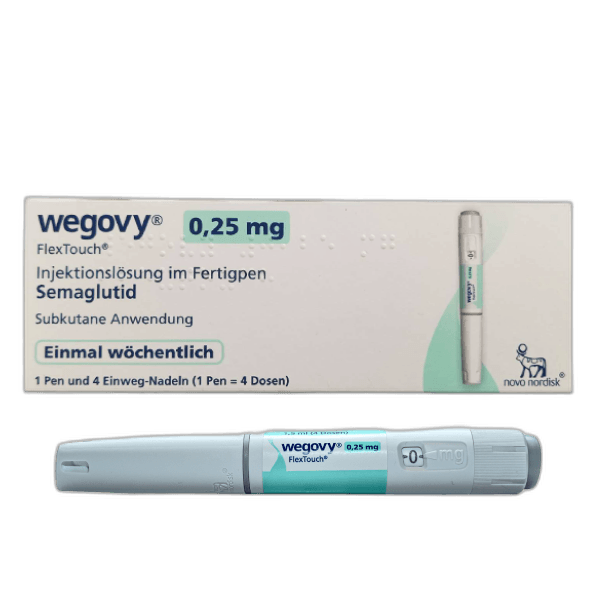
To understand: Ozempic is primarily a diabetes medication. For the treatment of overweight without diabetes, the same active ingredient is permitted under the name Wegovy in higher dosage. Nevertheless, Ozempic is often prescribed "off-label" for weight loss.
The active ingredient Semaglutid belongs to the class of GLP-1 receptor agonists. It imitates a natural intestinal hormone that regulates blood sugar and affects saturation. The drug is injected once a week under the skin.
Ozempic has shown in studies average weight loss of 10-15% of body weight – in some patients even more.
Active Ingredients & Mechanism of Action
Active ingredient: Semaglutid
Semaglutid imitates the body's own hormone GLP-1 (Glucagon-like Peptide-1), which has several functions:
**1. Appetite regulation in the brain:* * GLP-1 receptors in the brain influence the saturation center. Semaglutid activates these receptors and leads to increased and prolonged saturation. Many users report that they are less hungry and are fed up faster.
**2. Slow gastric emptying:* * The stomach content is more slowly passed on to the intestine. This will make you feel tired longer and eat less automatically.
3. Blood sugar regulation (for diabetics): Semaglutid promotes insulin distribution and inhibits glucagon – but only when blood sugar is increased. This reduces the risk of undersugars.
The following: Most people eat less without constantly feeling hungry. Weight loss is primarily due to reduced calorie intake, not due to increased calorie consumption.
Study results: In the STEP study series, participants with Semaglutid lost an average of 15% of their body weight over 68 weeks – significantly more than placebo.
Who is it suitable for?
Approved indication (Ozempic):
- Adults with type 2 diabetes mellitus to improve blood sugar control
- In combination with diet and exercise
- as monotherapy or in combination with other diabetes medications
Off-label use at overweight: Ozempic is often used outside the authorisation for obesity without diabetes. For this indication, Wegovy (high dosed Semaglutid) is admitted.
Type candidates for treatment:
- BMI ≥ 30 (obesity)
- BMI ≥ 27 with weight-related accompanying diseases
- Unsuccessful experiments with diet and exercise
- Motivation for long-term lifestyle changes
More suitable for:
- Type 1 diabetes (contrainted)
- History of pancreatitis
- Heavy kidney failure
- pregnancy or breastfeeding
- Eating disorders in history
**Ozempic is not a lifestyle drug for light overweight. It is intended for people whose weight threatens their health.
Available Dosages
Ozempic dosages (approved for diabetes):
- 0.25 mg weekly – start dose for 4 weeks
- 0.5 mg weekly – Maintenance dose after dosing
- 2 mg weekly – Maximum available dose
Typical dosing scheme:
- Weeks 1-4: 0.25 mg
- From week 5: 0.5 mg
- If required from week 9: 1 mg
- If required from week 13: 2 mg
For weight loss: The weight reduction is dose-dependent. Higher doses lead to more weight loss, but also to more side effects. For optimum weight loss, Wegovy (up to 2.4 mg) is better suited.
Available pens:
- FlexTouch Pen with 0.25 mg and 0.5 mg
- FlexTouch Pen with 1 mg
- FlexTouch Pen with 2 mg
Each pen contains 4 doses for 4 weeks.
How to Take
Application:
- One week, the same weekday
- Subcutaneous injection (under the skin)
- Possible injection points: belly, thighs, upper arm
- Independent meals
Injection technology: 1. Take pen from the refrigerator (can come to room temperature for 30 minutes) Two. New needle 3. Set dose 4. Form the skin fold and insert the needle Five. Press injection button and hold 6 seconds 6. Remove needle and safely dispose
Change weekday: If necessary, the injection day can be changed as long as at least 2 days are between the injections.
Forget dose:
- Within 5 days: Pick up as soon as possible
- After 5 days: leave the dose and continue with the next regular appointment
Restoration:
- In the refrigerator (2-8°C)
- After rupture: at room temperature (up to 30°C) or in a refrigerator for max. 6 weeks
Contraindications
Absolute contraindications:
- Type 1 diabetes: Ozempic is only approved for type 2 diabetes
- Diabetic ketoacidosis: Not suitable for treatment
- Sensitivity: against semaglutide or any of the other components
- **Family history of medullary thyroid carcinoma* *
- **Multiple endocrine neoplasia type 2 (MEN 2) * *
Relative contraindications – special care:
- Pankreatitis in prehistory: Increased risk for renewed pancreatic inflammation
- Heavy kidney failure: Application not recommended, limited experience
- Smooth gastronomic intestinal diseases: Gastroparese, inflammatory intestinal diseases
- Diabetic retinopathy:Cross control required
- pregnant and breastfeeding: Not recommended, deduction 2 months before planned pregnancy
Warning Notes:
- Hypoglykemia risk: In combination with insulin or sulfonylureas increased
- Sthyroidism: For thyroid knots or -enlarging medical clarification
- Dehydration: In case of strong vomiting or diarrhea, pay attention to sufficient liquid supply
Possible Side Effects
**Very common (more than 10%):* *
- nausea (especially at the beginning)
- diarrhea
- Blocking
- stomach pain
- Break.
These gastrointestinal complaints are typical of GLP-1 agonists and usually improve after a few weeks.
Acid (1-10%):
- Headaches
- Squeeze
- fatigue
- Blowing
- Sodburning
- Lost appetite
- Galle stones (with rapid weight loss)
** Occasionally (0,1-1%):* *
- Changes in taste
- Increased heart rate
- Reactions at the injection site
Selten, but seriously:
- Pankreatitis: Strong, persistent abdominal pain – immediately consult doctor
- **Swiss allergic reactions * *
- Acute kidney failure (with severe dehydration)
- deterioration of diabetic retinopathy * *
Tips against nausea:
- Slowly dosing
- Small meals
- Avoid fat food
- Drink enough
Interactions
Important interactions:
Insulin and sulfonylureas:
- Increased hypoglycemia risk
- Dose reduction of these drugs often required
- Close blood sugar control
Oral medicines:
- Ozempic slows down stomach emptying
- Taking other medicines may be altered
- Especially relevant for time-critical drugs (e.g. antibiotics)
Oral contraceptives:
- The absorption can be influenced by delayed gastric emptying
- Consider additional prevention for gastrointestinal complaints
Warfarin and other anticoagulants:
- INR controls recommended at the beginning and at dose changes
Alcohol:
- Can increase hypoglycemia risk (in diabetics)
- Can strengthen gastrointestinal side effects
General note: Tell your doctor about all the medicines you take. In some active substances, an adjustment of the intake time may be useful.
Frequently Asked Questions
Similar Medications
Is ozempic right for you?
A licensed doctor will review your information and issue a prescription if suitable. Discreet and secure.
Important Notice
This information does not replace medical advice. If you have questions about your health or the suitability of this medication, please consult a doctor. Read the package leaflet before use.