
Overview
In this section you will get an overview of the condition and its relevance to your health.
Cold sores — also known as fever blisters — are one of the most common viral infections of the skin. Approximately 80 to 90 percent of adults carry the responsible herpes simplex virus type 1 (HSV-1). In many people, the infection remains unnoticed throughout their lives, while others experience regular painful blisters on their lips.
A herpes outbreak is often distressing for those affected, as the visible skin changes are perceived as bothersome or embarrassing. In addition, burning, tightness, or pain may occur.
The good news: Cold sores are highly treatable. Antiviral medications can significantly shorten the course of the outbreak — especially when treatment is started early. Physician-supervised online treatment is also available.
What is it?
Here you will learn what medically characterizes this condition and how it is defined.
Cold sores are caused by herpes simplex virus type 1 (HSV-1). The initial infection usually occurs in childhood, often unnoticed or with mild symptoms.
After the initial infection, the virus remains in the body for life and retreats into nerve ganglia. There it remains in an inactive state. Under certain circumstances, the virus can be reactivated and cause symptoms again.
A hallmark of cold sores is the recurrent appearance of blisters at the same location or nearby. The infection is not curable but can be well controlled.
Causes
The following information explains which factors can contribute to the development of this condition.
A herpes outbreak occurs when the dormant virus in the body is reactivated.
Common triggers include:
- Stress or emotional strain
- Infections with fever
- Sun exposure (UV radiation)
- Sleep deprivation
- Hormonal fluctuations
- Weakened immune system
The initial infection usually occurs through direct contact, such as kissing or sharing utensils. During an active outbreak, the virus is particularly contagious.
Symptoms
This section describes the typical signs and symptoms you should watch for.
Cold sores typically progress through several phases.
Early symptoms include:
- Tingling
- Burning
- A sensation of tightness at the affected area
Typical symptoms in the further course:
- Small, fluid-filled blisters
- Pain or pressure sensation
- Crusting after the blisters burst
After approximately 7 to 10 days, the cold sore usually heals without scarring.
Warning signs that should be evaluated by a physician include:
- Very frequent or particularly severe outbreaks
- Eye involvement
- Fever or significant systemic symptoms
Diagnosis
Below you will learn how this condition is detected through medical examinations.
The diagnosis of cold sores is usually made based on the characteristic appearance.
In unclear cases, a swab from the blisters can be taken and examined in the laboratory. However, this is rarely necessary.
In the context of an online consultation, a description of the symptoms or assessment of photographs is usually sufficient to establish a reliable diagnosis.
Treatment
Here the available therapy options and their modes of action are explained.
Cold sores are treated with antiviral medications, known as antivirals.
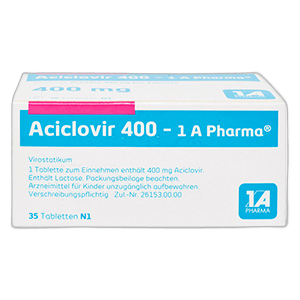
Aciclovir is the most commonly used active ingredient. It can be applied topically as a cream or taken as a tablet in severe cases. The active ingredient inhibits viral replication.
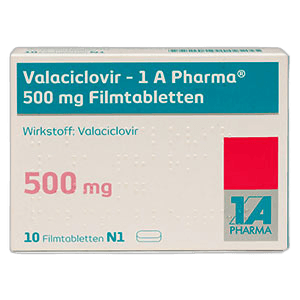
Valaciclovir is an advanced form of aciclovir with better absorption in the body and is usually taken as a tablet. It can significantly shorten the duration and intensity of an outbreak.
Important notes:
- Treatment is most effective when started at the first signs (tingling).
- During an active outbreak, direct contact with others should be avoided.
Common side effects of oral antiviral medications include headaches, gastrointestinal discomfort, or fatigue.
Available medications
Various prescription medications are available for treatment. Click on a medication to learn more about its effects, dosage and side effects.
Prevention
This section provides guidance on prevention and reducing risk factors.
Complete prevention of cold sores is not possible, as the virus remains in the body for life.
The following can help reduce outbreaks:
- Stress reduction
- Adequate sleep
- Sun protection for the lips
- Strengthening the immune system
For very frequent recurrences, preventive antiviral therapy may be considered.
FAQ
Here you will find answers to frequently asked questions on this topic.
Would you like a medical assessment?
Fill out the medical questionnaire. A licensed doctor will review your information and recommend a suitable therapy if appropriate.
Important notice
This content is for general information only. In case of severe pain, shortness of breath, impaired consciousness, fever > 39°C or rapidly worsening symptoms, please seek immediate medical help ().
Related treatments
More treatments from the Hautpflege area that might interest you.