
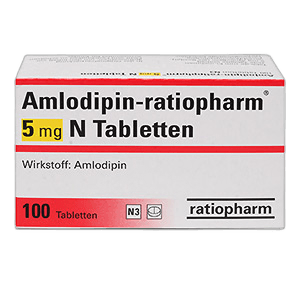
What is amlodipine?
Amlodipine is a calcium channel blocker (calcium antagonist) of the dihydropyridine type and one of the most commonly prescribed blood pressure sinks worldwide. It is used for treating high blood pressure and chronic stable angina pectoris.
Amlodipine is characterized by a particularly long half-life (35-50 hours), which ensures a reliable 24-hour activity with once daily intake. The active ingredient is available as a monopreparation and in numerous combinations: with Valsartan (Exforge®, Dafiro®), with Olmesartan (Sevikar), with Ramipril (Ramipril HEXAL® plus Amlodipine) and in triple combinations with Sartans and HCT (e.g. Vocado® HCT).
Amlodipine is available as a generic by numerous manufacturers and is one of the pillars of modern hypertension therapy.
Active Ingredients & Mechanism of Action
Active ingredient: Amlodipin
Amlodipin blocks voltage-dependent L-type calcium channels:
Active mechanism:
- Blocks the calcium inflow into the smooth vascular muscle
- The vascular muscle cells can no longer contract
- Arteries and arteries expand
- The peripheral vascular resistance drops
- The blood pressure falls
Special features:
- Works mainly on vessels (not on the heart)
- No relevant reduction in heart rate
- No influence on the excitation line at the heart
- Very long half-life (35-50 hours)
- Uniform level of action without peaks and depths
For Angina pectoris:
- Extends the coronary arteries
- Improves blood circulation of the heart muscle
- Reduces oxygen consumption by reducing the load
Initiation of action: Slow, uniform penetration over 6-12 hours. Stable blood pressure reduction after 7-14 days. No reflextachycardia risk as with rapidly effective calcium channel blockers.
Who is it suitable for?
Amlodipine is suitable for:
- Adults with high blood pressure
- Chronic stable angina pectoris
- Vasospastische Angina (Prinzmetal-Angina)
Especially recommended at:
- Isolated systolic hypertension (especially older patients)
- High blood pressure in dark-acid patients (better response)
- Angina pectoris with high blood pressure
- Raynaud syndrome (improved peripheral blood circulation)
- In combination with ACE inhibitors or sartans
Not suitable:
- Heavy aortic stenosis
- unstable angina pectoris
- Cardiogenic shock
- Heavy hypotension
- Pregnancy
Available Dosages
High blood pressure:
- start dose: 5 mg once a day
- usual maintenance dose: 5-10 mg once a day
- Maximum dose: 10 mg daily
Angina pectoris:
- 5-10 mg once a day
Older patients / liver failure:
- start dose: 2.5-5 mg once a day
Available starches:
- 5 mg, 10 mg tablets
Combination preparations:
- Amlodipine + Valsartan (Exforge®, Dafiro®)
- Amlodipine + Olmesartan (Sevikar)
- Amlodipine + Ramipril (Ramipril HEXAL® plus Amlodipine)
- Amlodipine + Valsartan + HCT (Exforge HCT®)
- Amlodipine + Olmesartan + HCT (Vocado® HCT)
How to Take
Intake:
- Once a day, always at the same time
- Independent meals
- Suck with sufficient water
- morning or evening possible
Dosis adjustment:
- Beginning with 5 mg
- Increase to 10 mg after 2-4 weeks if required
- No need to be inserted (slow impact)
Important notes:
- No abrupt drop (long half-life) required
- Avoid grapefruit juice (increases amlodipine mirror lightly)
- Ankle edema are common, but harmless
- Include dentist with gum swelling
Contraindications
**Amlodipine must not be taken at:* *
- hypersensitivity to amlodipine or other dihydropyridines
- Heavy hypotension (systolic under 90 mmHg)
- Cardiogenic shock
- Heavy aortic stenosis
- Unstable Angina pectoris (except Prinzmetal-Angina)
- Acute heart attack (first 4 weeks)
Preview at:
- Heart failure (NYHA III-IV)
- Liver insufficiency (reduced degradation)
- Older patients (lower start dose)
pregnant: Not recommended. Animal experiments showed evidence of reproduction toxicity. Alternative blood pressure medications (e.g. methyldopa) prefer.
Possible Side Effects
Very common (over 10%):
- Ankle edema (dose dependent, up to 10-15% at 10 mg)
Acid (1-10%):
- Headaches
- Face redness (Flush)
- tiredness, sleepiness
- Squeeze
- Heart palp
- Gastrointestinal complaints
** Occasionally (0,1-1%):* *
- Mood fluctuations, sleep disturbances
- Tremor
- visual disorders
- Skin rash, itching
- Muscle cramps
- Gum swelling (Gingivahyperplasia)
Selten:
- Allergic reactions
- liver value increases
- Heart rhythm disorders
Ankle oedema: The most common side effect. They are formed by expanded arteries in non-expanded veins (no heart failure). The combination with an ACE inhibitor or sartan can significantly reduce the edema.
Interactions
Preview with simultaneous use of:
- Strong CYP3A4 inhibitors (Ketoconazole, Itraconazole, Ritonavir) → increased amlodipine levels
- CYP3A4 inductors (Rifampicin, Johanniskraut) → reduced action
- Simvastatin → dose to max. Limiting 20 mg
- Ciclosporin → increased ciclosporin mirror
- Tacrolimus → increased Tacrolimus levels
- Other blood pressure counter → increased hypotension
Grapefruit: Grapefruit juice can inhibit the degradation of amlodipine and increase the effect easily. Moderate consumption is usually unproblematic, regular consumption of large quantities should be avoided.
Advantage: Amlodipine has less interaction than Verapamil or Diltiazem and can be safely combined with beta blockers.
Frequently Asked Questions
Similar Medications
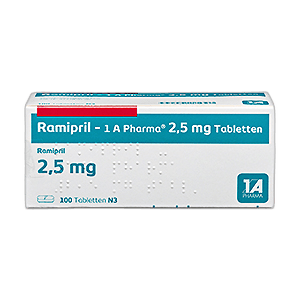
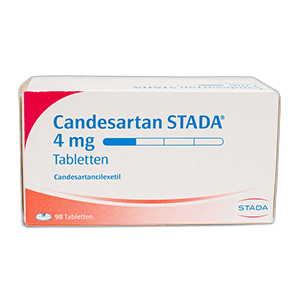
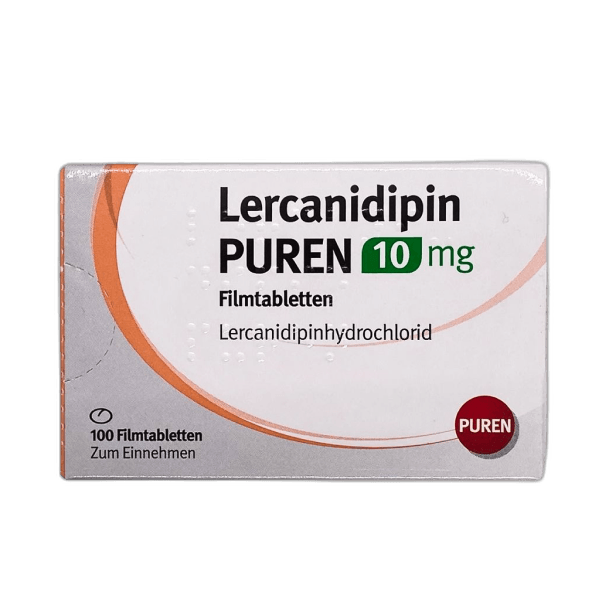
Is amlodipine right for you?
A licensed doctor will review your information and issue a prescription if suitable. Discreet and secure.
Important Notice
This information does not replace medical advice. If you have questions about your health or the suitability of this medication, please consult a doctor. Read the package leaflet before use.