
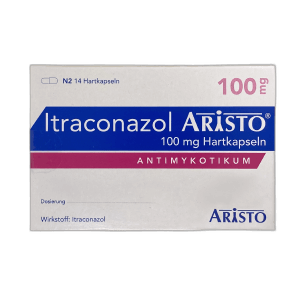
What is itraconazole?
Itraconazole is a triazole antimycotic with a broad spectrum of action which is used in various fungal infections. In vulvovaginal candidose, it is used if fluconazole or clotrimazole do not act sufficiently, in particular in infections with non-albicans-canida species (e.g. C. glabrata, C. krusei).
Itraconazole is sold under the brand name Sempera® and as a generic. It is also approved for skin fungus, nail fungus and systemic mycoses.
Active Ingredients & Mechanism of Action
Active ingredient: Itraconazol
Active mechanism:
- inhibits 14-alpha demethylase (CYP51)
- Blocks the ergosterol synthesis in the fungal cell membrane
- Ergosterol is an essential part of the fungal cell membrane
- The cell membrane is unstable → fungal cell dies
Bread spectrum as fluconazole:
- Candida albicans and non-albicans species
- Aspergillus
- Dermatophytes
- Also effective against some Fluconazole-resistant strains
Pharmacokinetics:
- Lipophil → good tissue penetration
- Long half-life → Effect stops after decommissioning
- absorption strongly dependent on stomach acid and food
Who is it suitable for?
Itraconazole is suitable for:
- Vulvovaginal candidose that does not respond to fluconazole
- Infections with non-albicans candidate species
- Recurrent Candidose (suppression therapy)
- Skin and nail mushroom
- Systemic mycoses
Not suitable:
- Pregnancy (teratogenic in animal testing)
- Heart failure
- Heavy liver failure
- Simultaneous use of certain drugs (CYP3A4 interactions)
Available Dosages
Vulvovaginal candidose:
- 200 mg twice a day for 1 day (short time therapy)
- Or 200 mg once a day for 3 days
Recurrent Candidose (Suppression):
- 200 mg once a day for the first 3 days of menstruation, over 6 months
Available starches:
- 100 mg capsules
Important:
- Take capsules with a full meal (take!)
- In the case of achlorohydric gastric situation (proton pump inhibitor): absorption greatly reduced
How to Take
Intake:
- Take directly after a complete meal
- Capsules in whole swallow
- Do NOT combine with acidic beverages, cola or orange juice (only recommended for achlorohydria)
Important notes:
- Recording is highly dependent on food
- PPI (Omeprazole etc.) reduce the absorption considerably
- Control liver values before and during therapy
- Safe prevention during and 2 months after therapy (women)
Contraindications
**Itraconazole must not be taken at:* *
- hypersensitivity to Itraconazole
- Pregnancy and breastfeeding
- Heart failure (NYHA III–IV)
- Simultaneous administration of: terfenadin, astemizol, cisaprid, simvastatin, lovastatin, midazolam (oral), triazolam, pimozid, quinidine, dofetilide, ergotamine
Preview at:
- Liver disease (hepatotoxic!)
- Restricted kidney function
- Achlorhydria/PPI therapy (reduced absorption)
- QT extension
Possible Side Effects
Family (1–10 %):
- nausea, abdominal pain
- Headaches
- Increased liver levels
- Skin rash
** Occasionally (0.1-1 %):* *
- diarrhea, clogging
- Squeeze
- Cycle disturbances
- Edema
Selten, but seriously:
- Hepatotoxicity (leberitis to liver failure)
- Heart failure
- Peripheral neuropathy
- Stevens-Johnson's syndrome
** For therapy over 1 month or for risk factors: regular liver value controls.
Frequently Asked Questions
Similar Medications
Is itraconazole right for you?
A licensed doctor will review your information and issue a prescription if suitable. Discreet and secure.
Important Notice
This information does not replace medical advice. If you have questions about your health or the suitability of this medication, please consult a doctor. Read the package leaflet before use.