
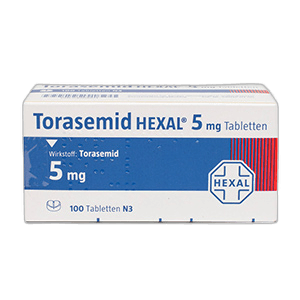
What is folasemid?
Torasemid is a loop diuretic of the newer generation and a further development towards furosemid. It is used in high blood pressure and edema as a result of heart failure, kidney or liver disease.
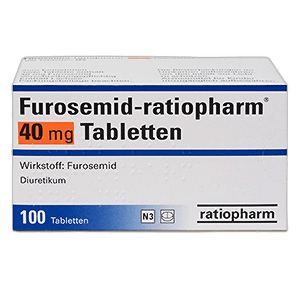
Compared to furosemid, torasemid offers several advantages: a higher and more reliable bioavailability (80-100% vs. 50-70% for furosemid), a longer effective duration (12-16 hours), less potassium loss and no rebound sodium retention. Known preparations are Torasemid HEXAL®, Torasemid-ratiopharm and Torem®.
In the low dose of 2.5-5 mg, torasemid is also used as a mild diuretic at high blood pressure, similar to a thiazide.
Active Ingredients & Mechanism of Action
Active ingredient: Torasemid
Torasemid inhibits the NKCC2 cotransporter in the Henle loop:
Active mechanism:
- inhibits the resorption of sodium, potassium and chloride
- Promotes water separation
- Lowers blood volume and blood pressure
Advantages over furosemide:
- Higher bioavailability (80-100% oral)
- More uniform recording (less variable)
- Longer duration (12-16 hours vs. 4-6 hours)
- Less potassium loss
- No rebound sodium retention after the end of effect
- Additional aldosterone antagonistic effect
Antihypertensive action: In a low dose (2.5-5 mg), torasemid acts similarly to a thiazid diuretic and lowers blood pressure without strong dewatering. In a higher dose (10-200 mg) it acts as a powerful grinding diuretic.
Initiation of action: Oral after 1 hour. Maximum effect after 1-2 hours. Duration: 12-16 hours.
Who is it suitable for?
Torasemid is suitable for:
- Adults with high blood pressure (low dose)
- Edema in heart failure
- Edema in kidney disease
- Edema in liver cirrhosis
Especially recommended at:
- Heart failure (TORAFIC study shows advantages over furosemide)
- Patients with potassium loss under furosemid
- If more uniform drainage is desired
- High blood pressure as mild diuretic therapy
Not suitable:
- Anurie
- Heavy hypovolaemia
- Heavy electrolyte disorders
- Hepatic encephalopathy
- hypersensitivity to torasemid or sulfonylureas
Available Dosages
High blood pressure:
- usual dose: 2.5-5 mg once a day
- Maximum dose for high blood pressure: 5 mg daily
Edema in heart failure:
- start dose: 5-10 mg once a day
- usual dose: 10-20 mg once a day
- Maximum dose: 200 mg daily
Edema for kidney failure:
- 20-200 mg once a day
Edema in liver cirrhosis:
- 5-10 mg once a day (with potassium-saving diuretic)
Available starches:
- 2.5 mg, 5 mg, 10 mg, 20 mg, 50 mg, 100 mg, 200 mg tablets
How to Take
Intake:
- Once a day, preferably morning
- Independent meals
- With sufficient water
- Always at the same time
**
- Regular laboratory controls (electrolytes, kidneys, blood sugar)
- Control weight regularly
- Drink sufficient (according to medical instructions)
- Potassium-rich diet can be helpful
- In case of vomiting or diarrhea: contact doctor
Advantage to Furosemid: As a result of the longer duration of action, the urine rank is more uniform and less disturbing than with furosemide.
Contraindications
**Torasemid must not be taken at:* *
- Anurie (no urine production)
- Precious or comatious hepatic encephalopathy
- Heavy hypokalemia or hyponatriemia
- Heavy hypovolaemia/dehydration
- hypersensitivity to torasemid or sulfonylureas
- Still time
Preview at:
- Diabetes mellitus (blood sugar increase)
- gout/hyperuremia
- Liver cirrhosis (electrolyte control tight-mesh)
- Simultaneous use of digitalis preparations
- Prostate hyperplasia
pregnant: Only with strict indication. Torasemid can pass the placenta and influence the fetal diuresis.
Possible Side Effects
Acid (1-10%):
- Increased urinary rank (wanted)
- Light electrolyte displacement
- Mouth dryness
- Increased uric acid
** Occasionally (0,1-1%):* *
- Hypokaliemia (less than Furosemid)
- Hyponatriemia
- dizziness, headache
- Gastrointestinal complaints
- Muscle cramps
- Increase in blood sugar
Selten:
- Skin rash
- photosensitization
- Blood-image changes
- Pancreatitis
- hearing disorders (at very high doses)
Advantage: Torasemid causes less hypokaliemia than furosemid and has a more uniform dewatering without rebound effect.
Interactions
Dangerous combinations:
- Aminoglycosides → enhanced ovoid and nephrotoxicity
- Cisplatin → increased nephrotoxicity
- Lithium → increased lithium mirror
Preview at:
- Digitalis preparations → Potassium loss strengthens digitalis toxicity
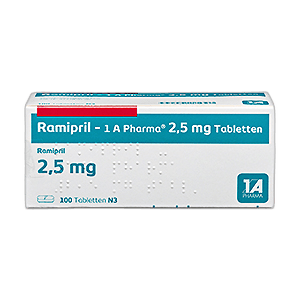
- ACE-Hemmer/Sartane → Reinforced hypotension (especially for initial submission)
- NSAR → reduced diuretic action
- Corticosteroids → increased potassium loss
- Probeecid → reduced torasemid effect
- Cholestyramine → reduced torasemid absorption
** Torasemid has less variable absorption than furosemid, making the interactions more predictable with food and other medicines.
Frequently Asked Questions
Similar Medications
Is folasemid right for you?
A licensed doctor will review your information and issue a prescription if suitable. Discreet and secure.
Important Notice
This information does not replace medical advice. If you have questions about your health or the suitability of this medication, please consult a doctor. Read the package leaflet before use.