
Overview
In this section you will get an overview of the condition and its relevance to your health.
Genital warts — also called condylomata acuminata — are among the most common sexually transmitted infections. They are caused by human papillomaviruses (HPV) and affect both women and men equally. Many sufferers find the visible changes very distressing.
The infection often goes unnoticed because weeks to months can pass between transmission and the appearance of warts. During this time, the virus can be unknowingly passed on.
The good news: Genital warts are highly treatable in most cases. With modern therapies, the warts can be removed and symptoms relieved — including after medical review as part of an online consultation.
What is it?
Here you will learn what medically characterizes this condition and how it is defined.
Genital warts are benign growths of the skin and mucous membranes in the genital or anal area. They are predominantly caused by certain types of human papillomavirus (HPV), especially HPV types 6 and 11.
These HPV types are considered low-risk HPV because they generally do not cause cancer. However, they can cause unpleasant symptoms and spread if left untreated.
HPV infections are very common. Most people become infected at least once during their lifetime, often without noticing it.
Causes
The following information explains which factors can contribute to the development of this condition.
The cause of genital warts is an infection with HPV.
Transmission routes include:
- Unprotected vaginal, anal, or oral intercourse
- Close skin-to-skin contact in the genital area
Risk factors include:
- Frequently changing sexual partners
- Unprotected sexual intercourse
- Weakened immune system
- Presence of other sexually transmitted infections
Condoms reduce the risk of infection but do not provide complete protection, as HPV can also be transmitted through uncovered skin areas.
Symptoms
This section describes the typical signs and symptoms you should watch for.
Genital warts can vary greatly in appearance and often go unnoticed initially.
Typical characteristics include:
- Skin-colored or whitish nodules
- Cauliflower-like growths
- Single or grouped warts
Affected areas include:
- Vagina, vulva, and cervix
- Penis and scrotum
- Anus and perianal area
Genital warts generally do not cause pain. However, itching, burning, or a foreign body sensation may occur.
Warning signs that should be evaluated by a physician include bleeding, pain, or rapid growth of the warts.
Diagnosis
Below you will learn how this condition is detected through medical examinations.
The diagnosis of genital warts is usually made by visual inspection, as the appearance is very characteristic.
In unclear cases, additional examinations may be necessary, such as:
- Acetic acid test
- Swab or tissue biopsy
- HPV testing for specific clinical questions
As part of an online consultation, photographs and a description of symptoms can be used for an initial medical assessment. If necessary, an in-person examination will be recommended.
Treatment
Here the available therapy options and their modes of action are explained.
The treatment of genital warts aims to remove visible warts and relieve symptoms. Complete elimination of the virus from the body is not possible.
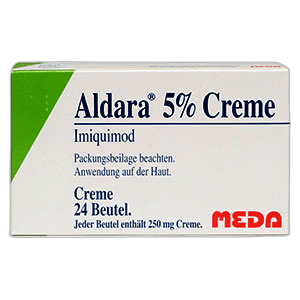
Imiquimod is a cream that locally activates the immune system and promotes healing of the warts. Treatment extends over several weeks. Common side effects include local skin irritation.
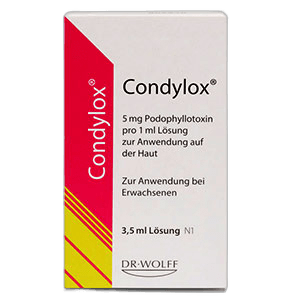
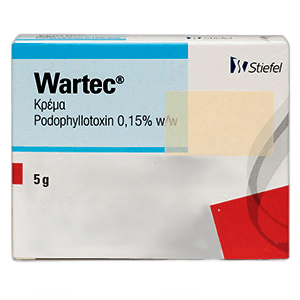
Podophyllotoxin has a direct cytotoxic effect on the warts and is applied topically. Treatment is administered in cycles.
Additional treatment options include:
- Cryotherapy (freezing)
- Laser or surgical removal
Important notes:
- Recurrences are possible, especially in the first few months.
- Sexual partners should be informed.
- Sexual intercourse should be avoided during treatment if possible.
Available medications
Various prescription medications are available for treatment. Click on a medication to learn more about its effects, dosage and side effects.

Prevention
This section provides guidance on prevention and reducing risk factors.
The most important preventive measure is the HPV vaccination. It provides reliable protection against the most common HPV types that cause genital warts and certain cancers.
Additional measures include:
- Condom use
- Regular preventive examinations
- Strengthening the immune system
Vaccination can also be beneficial after a previous infection.
FAQ
Here you will find answers to frequently asked questions on this topic.
Would you like a medical assessment?
Fill out the medical questionnaire. A licensed doctor will review your information and recommend a suitable therapy if appropriate.
Important notice
This content is for general information only. In case of severe pain, shortness of breath, impaired consciousness, fever > 39°C or rapidly worsening symptoms, please seek immediate medical help ().
Related treatments
More treatments from the Geschlechtskrankheiten area that might interest you.
Chlamydien
Ein kurzer Fragebogen hilft, Symptome, Risiken und nächste Schritte strukturiert zu erfassen.
Genitalherpes
Wir fragen Verlauf und Beschwerden ab, um passende Optionen medizinisch zu bewerten.
HIV Prävention (PrEP)
Kurzer Check zu Risiken, Vorerkrankungen und Voraussetzungen für eine sichere Einordnung.
Gonorrhoe
Ein kurzer Fragebogen hilft, Symptome und Risiken strukturiert zu erfassen.